Who it may suit
It may be considered for people with a failing dentition, extensive tooth loss or an unstable complete denture. The decision follows detailed clinical and radiographic assessment.
Full-arch rehabilitation uses several implants to support a complete set of teeth in one jaw. The pathway connects diagnosis, digital tooth design, computer-guided surgery when appropriate, provisional care and definitive implant prosthetics; it is not a single product or a universal same-day promise.
This opens a direct conversation with the booking number. Briefly describe your situation; the plan is confirmed after examination and review of appropriate imaging.
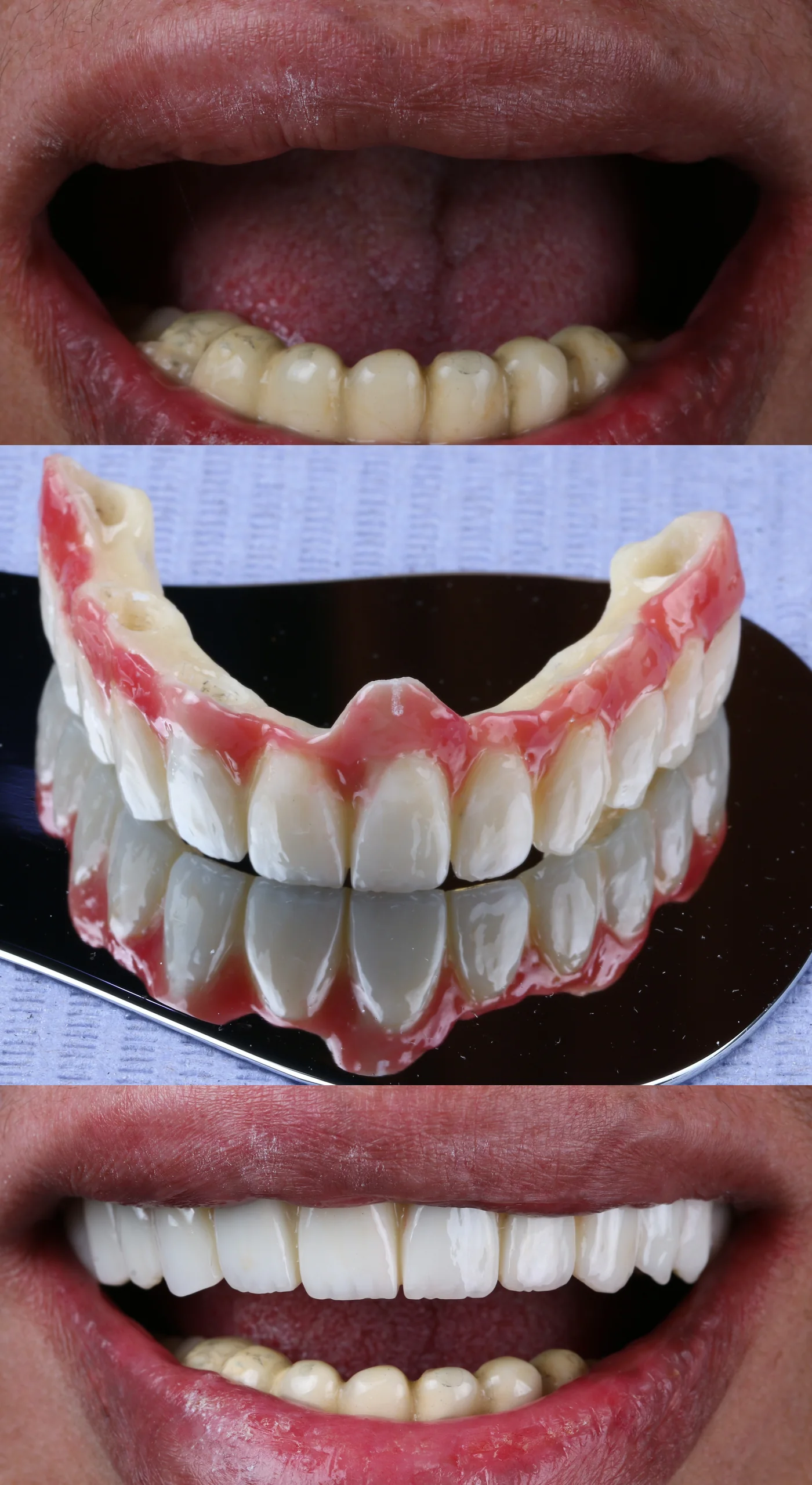
Clinical documentation of treatment stages shown in the available images. Plans and outcomes vary between patients.
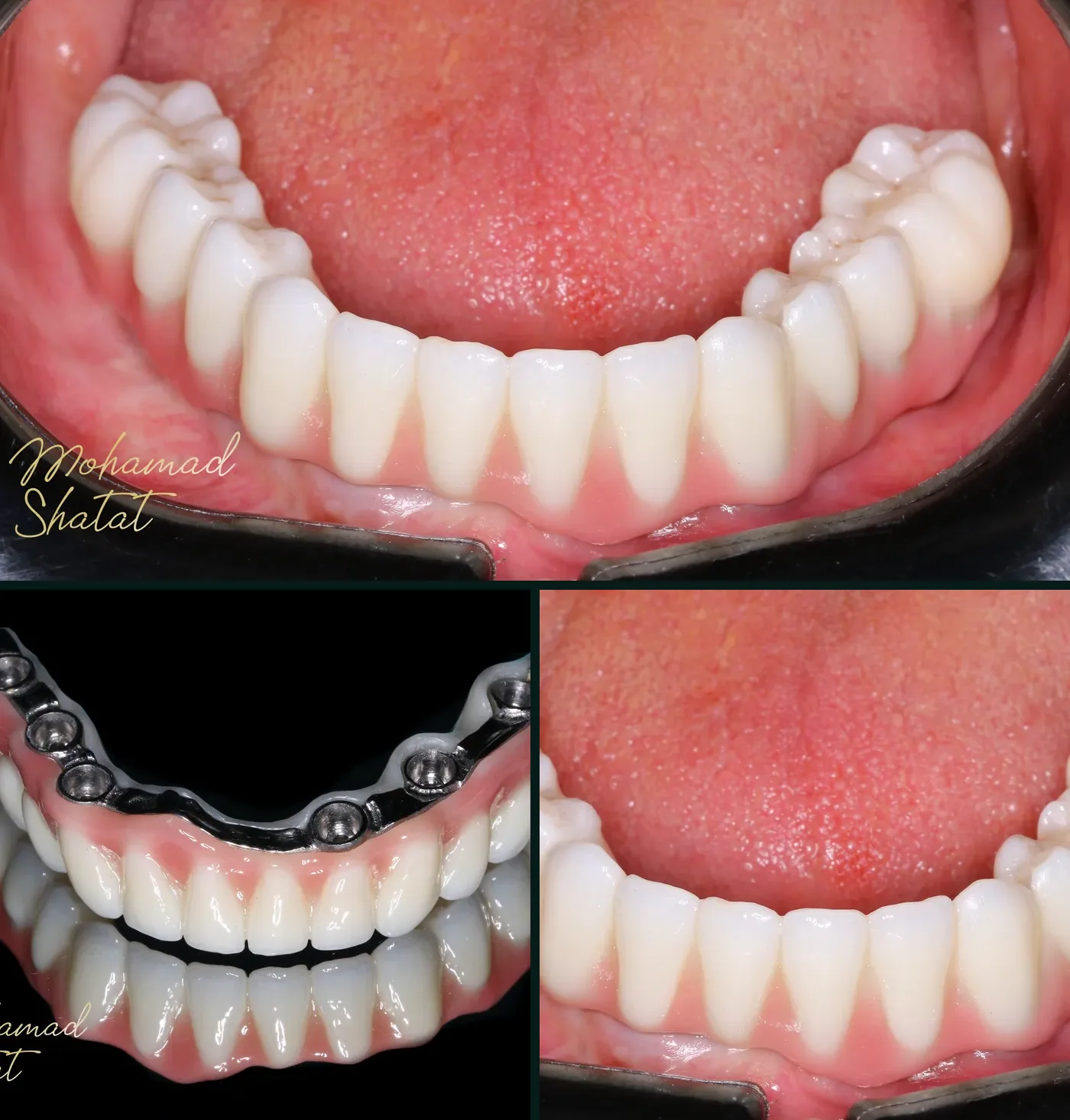
Clinical documentation of treatment stages shown in the available images. Plans and outcomes vary between patients.
Reviews from the verified clinic archive describe individual experiences. They are not testimonials for the displayed cases or a promise of similar results.
Archive verified on 14 July 2026.
★★★★★“جيت ل دكتور محمد شتات ف صفا الماسي حي الصفا سويت عنده زراعة و تركيبات الدكتور رائع وامين بارك الله فيه وبعمله”
★★★★★“سويت زراعة و تركيبات مع دكتور محمد شتات و التجربة كانت ممتازه ، الله يوفق الدكتور و العاملين في العياده ، شكراً”
Start with a clear consultation and examination, then discuss options and expected timing.
It may be considered for people with a failing dentition, extensive tooth loss or an unstable complete denture. The decision follows detailed clinical and radiographic assessment.
The proposed teeth are designed before implant positions are finalized. Scans, photographs, bite records and CBCT data may be combined so implant placement supports the intended appearance, function, screw access and hygiene.
A surgical guide may help transfer the digital plan when it can be seated and verified predictably. It supports coordination of multiple implants, but it does not remove the need for intraoperative checks or clinical judgment.
Verified implant or multi-unit positions can be connected with the tested tooth arrangement in software such as Exocad. CAD/CAM manufacturing may then produce provisional teeth, verification components or a definitive framework. Each transition still needs a clinical check before the next stage.
Multi-unit abutments can create a common restorative platform above implants and may help manage implant angulation in screw-retained full-arch prostheses. Their selection, height and angulation are planned for the individual anatomy and prosthesis.
A provisional restoration protects the early treatment concept and allows assessment of appearance, speech, bite and cleaning. The definitive prosthesis follows healing and verification; it is designed for long-term function, retrievability, maintenance and repair.
A CAD/CAM titanium framework may reinforce selected full-arch prostheses and connect the implant positions within a digitally designed structure. Material choice, framework design and fit verification are case-specific rather than automatic.
Some suitable patients may receive a fixed provisional restoration soon after surgery. Others need a healing denture or delayed loading. Primary stability, bone, surgical findings, bite and prosthetic design determine the safer pathway.
The final design must allow cleaning. Regular reviews assess tissues, screws, bite, prosthetic materials and home-care access. Full-arch prostheses can need maintenance or repair even when the implants remain integrated.
No. Immediate loading depends on bone, implant stability, medical factors, surgical findings and the planned prosthesis.
Start by assessing the remaining teeth, bone, bite, restorative space and cleaning access. The examination then guides whether computer-guided surgery, early provisional teeth and a particular digital prosthetic design are appropriate.